Eau de Parfum vs Toilette: Complete Comparison Guide
01 Nov 2025
Did you know about 90 percent of people choose their fragrance based on scent strength without understanding the real difference between Eau de Parfum and Eau de Toilette? This decision shapes not only how long your perfume lasts but also how it expresses your style in everyday life. By learning what sets these two types apart, you can find a scent that fits both your personality and every occasion.
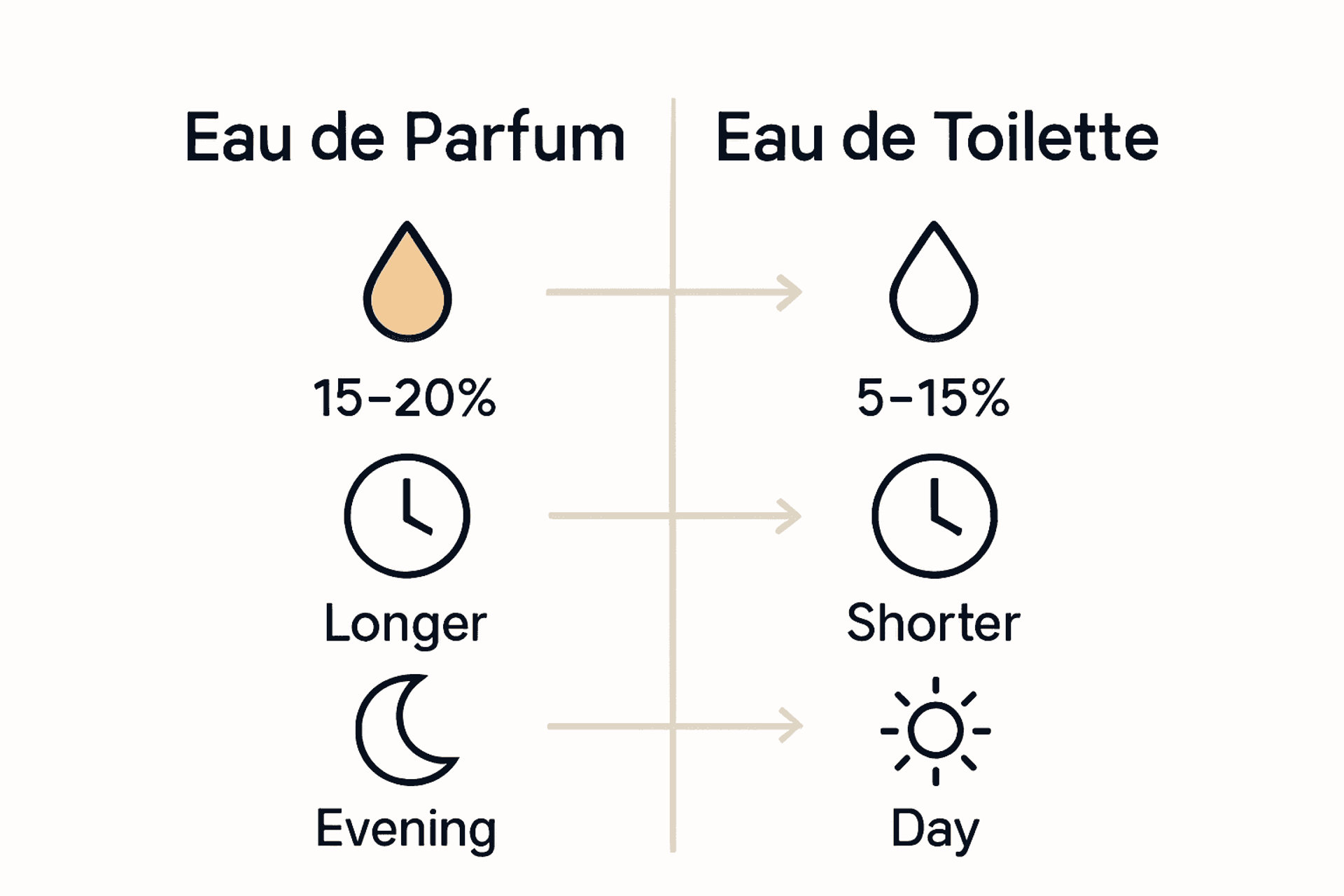
Eau de Parfum typically contains 15% - 20% fragrance oils, while Eau de Toilette has 5% - 15%.
Longevity and Scent Intensity
Eau de Parfum lasts 6 - 8 hours with a richer scent, whereas Eau de Toilette lasts 3 - 5 hours with a lighter fragrance.
Ideal Usage Context
Eau de Parfum is suited for evening or special occasions; Eau de Toilette is better for daytime and casual settings.
Personal Preference Matters
Choosing between the two depends on individual style, occasion, and desired scent intensity, rather than one being universally superior.
Defining Eau de Parfum and Eau de Toilette
Fragrances are a delicate dance of scent concentrations, with Eau de Parfum and Eau de Toilette representing two distinct levels of aromatic intensity. According to Vogue, these classifications are primarily defined by their fragrance oil percentages, which dramatically impact their sensory experience and longevity.
Eau de Parfum typically contains 15% to 20% fragrance oils, creating a richer and more profound olfactory profile. This higher concentration means EDP offers a more potent and long-lasting scent, perfect for evening events or occasions demanding a more dramatic fragrance presence. In contrast, Ulta explains that Eau de Toilette provides a lighter, more refreshing essence with a lower concentration of fragrance oils.
The key differences between these fragrance types extend beyond mere concentration. Eau de Toilette, with its 5% to 15% fragrance oil range, delivers a subtler aroma ideal for daytime wear, casual settings, and warmer climates. Its lighter composition means the scent tends to dissipate more quickly, making it an excellent choice for those preferring a more understated fragrance experience.
Understanding these nuanced differences can help you select the perfect scent for any occasion. For a deeper exploration of fragrance layers, check out our guide on understanding fragrance composition.
Key Differences in Concentration and Longevity
The concentration of fragrance oils plays a pivotal role in determining a perfume's performance, with longevity and intensity being the primary distinguishing factors between Eau de Parfum and Eau de Toilette.
Lancome provides clear insight into these critical differences, highlighting that the percentage of fragrance oils directly impacts how long a scent will linger on your skin.
Here's a comparison of the key differences between Eau de Parfum and Eau de Toilette:
Characteristic
Eau de Parfum (EDP)
Eau de Toilette (EDT)
Fragrance Oil Content
15% - 20%
5% - 15%
Longevity
6 - 8 hours
3 - 5 hours
Scent Intensity
Rich, pronounced
Light, refreshing
Ideal Usage
Evenings Special occasions
Daytime Casual wear
Recommended Climate
Cooler weather
Warmer climates
In terms of staying power, Eau de Parfum emerges as the clear winner. With a concentration of 15% to 20% fragrance oils, EDP typically maintains its aromatic profile for 6 to 8 hours. This makes it an ideal choice for evening events, special occasions, or situations where you want a persistent, memorable scent. The higher oil concentration means the fragrance molecules are more densely packed, allowing them to release their complex notes more slowly and consistently throughout the day.
Conversely, Eau de Toilette offers a more ephemeral experience. According to Fragranza, its lower concentration of 5% to 15% results in a lighter, fresher fragrance that typically lasts 3 to 5 hours. This characteristic makes EDT perfect for daytime wear, professional settings, or warmer climates where a subtle scent is preferred.
The shorter longevity means you might need to reapply throughout the day, but it also provides more flexibility in scent selection and layering.
To help you choose, consider your lifestyle and preferences. For long nights out or events requiring a persistent fragrance, Eau de Parfum is your go-to. For casual, everyday wear or warmer environments, Eau de Toilette offers a refreshing alternative. Learn more about exploring different fragrance layers in our comprehensive guide.
Scent Profiles and Ideal Use Cases
Understanding the nuanced scent profiles of Eau de Parfum and Eau de Toilette goes beyond mere concentration levels. T3 highlights the critical distinction in their ideal usage scenarios, revealing how each fragrance type is uniquely suited to different environments and occasions.
Eau de Parfum emerges as the sophisticated choice for evening wear and cooler weather. According to Masari Shop, these fragrances feature deeper, more complex scent compositions with intricate layers of top, heart, and base notes. This complexity makes EDP perfect for special occasions like formal events, romantic dinners, or sophisticated social gatherings where a bold, memorable fragrance can make a powerful statement.
In contrast, Eau de Toilette offers a lighter, more versatile olfactory experience. Its brighter top notes and fresher profile make it ideal for daytime environments such as professional settings, casual outings, and warmer climates. The subtle nature of EDT allows for more discreet personal expression, ensuring you smell pleasant without overwhelming those around you. Whether you're in a business meeting, enjoying a weekend brunch, or navigating a humid summer day, Eau de Toilette provides a refreshing and appropriate scent solution.
To truly master your fragrance selection, consider your lifestyle, personal style, and the specific context of your day. Explore our guide to different Eau de Parfum types to find the perfect scent that resonates with your unique personality and daily experiences.
Common Myths and Misconceptions Explained
Fragrance classification is often shrouded in mystery and misconception. Diffen challenges a prevalent myth that Eau de Parfum and Eau de Toilette differ solely in concentration, revealing that these fragrance types are far more nuanced in their scent composition and intended use.
One of the most persistent myths is that Eau de Parfum is universally superior to Eau de Toilette. According to Aroma Explorer, this is fundamentally incorrect. The truth is that neither fragrance type is objectively better. Instead, the ideal choice depends entirely on personal preference, specific occasion, and the desired scent intensity. What works brilliantly for a formal evening event might feel overwhelming in a professional daytime setting.
Another common misconception is that more expensive always means higher quality or longer-lasting fragrance. Price point doesn't necessarily correlate with a scent's performance or suitability. Some Eau de Toilette fragrances can be more sophisticated and well-crafted than their pricier Eau de Parfum counterparts. The key is to evaluate each fragrance on its individual merits – its unique blend of notes, how it interacts with your personal body chemistry, and how it makes you feel.
To truly understand your perfect fragrance match, experimentation is crucial. Discover more about fragrance types in our comprehensive guide and learn how to navigate the wonderful world of scents with confidence and sophistication.
How to Choose Between Parfum and Toilette
Selecting the perfect fragrance is an art that requires thoughtful consideration of multiple factors. Fragranza provides critical guidance, emphasizing that your choice should be deeply rooted in the setting, season, and your personal style.
According to Ulta, the decision between Eau de Parfum and Eau de Toilette hinges on three key elements: scent intensity, longevity, and occasion. For evening events, formal gatherings, or cooler weather, Eau de Parfum stands out as the superior choice. Its rich, complex profile ensures you'll make a memorable impression with a fragrance that speaks volumes about your sophistication. The higher concentration of oils means your scent will remain consistent and captivating throughout the night.
In contrast, Eau de Toilette shines in daytime scenarios and warmer climates. Its lighter composition makes it perfect for professional environments, casual outings, and situations where you want a subtle yet pleasant aromatic presence. If you're heading to a summer brunch, a day at the office, or an afternoon social gathering, EDT offers a refreshing and appropriate scent solution that won't overwhelm those around you. The key is understanding that neither option is universally superior – it's about matching the fragrance to your specific context.
To truly master your fragrance selection, experiment and trust your instincts. Explore our comprehensive blog for more fragrance insights and discover the nuanced world of scent selection that goes beyond simple concentration levels.
Find Your Perfect Scent Match with Fragplace
Choosing between Eau de Parfum and Eau de Toilette can feel overwhelming with so many factors like concentration, longevity, and occasion to consider. The article clearly shows how selecting the right fragrance intensity can shape your daily experience and confidence. If you have struggled with finding scents that truly suit your lifestyle or need detailed guidance on perfume notes and suitable contexts Fragplace offers a welcoming fragrance community and treasure trove of expert information.
Explore in-depth reviews, detailed fragrance compositions, and join passionate discussions with fellow scent enthusiasts at Fragplace.com. Whether you prefer the rich intensity of Eau de Parfum for special evenings or the fresh subtlety of Eau de Toilette for everyday wear Fragplace helps you decode every scent layer. Start your fragrance journey now and never second-guess your perfume choices again by visiting discover your signature scent and dive into our extensive resources and community support.
Frequently Asked Questions
What is the difference between Eau de Parfum and Eau de Toilette?
Eau de Parfum (EDP) typically contains 15% to 20% fragrance oils, providing a richer and longer-lasting scent, while Eau de Toilette (EDT) has 5% to 15% fragrance oils, resulting in a lighter, more ephemeral fragrance experience.
How long does Eau de Parfum last compared to Eau de Toilette?
Eau de Parfum usually lasts between 6 to 8 hours due to its higher oil concentration, whereas Eau de Toilette typically lasts around 3 to 5 hours before needing reapplication.
When should I choose Eau de Parfum over Eau de Toilette?
Eau de Parfum is ideal for evening events, special occasions, or cooler weather, where a more pronounced scent is desired. Conversely, Eau de Toilette is better for daytime use, casual settings, or warmer climates due to its lighter profile.
Are Eau de Parfum and Eau de Toilette suitable for all skin types?
Yes, both Eau de Parfum and Eau de Toilette are generally suitable for all skin types. However, the scent's longevity and intensity can vary based on individual body chemistry, so it's best to test and find the fragrance that works best for you.